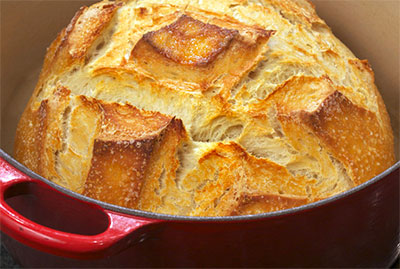

















































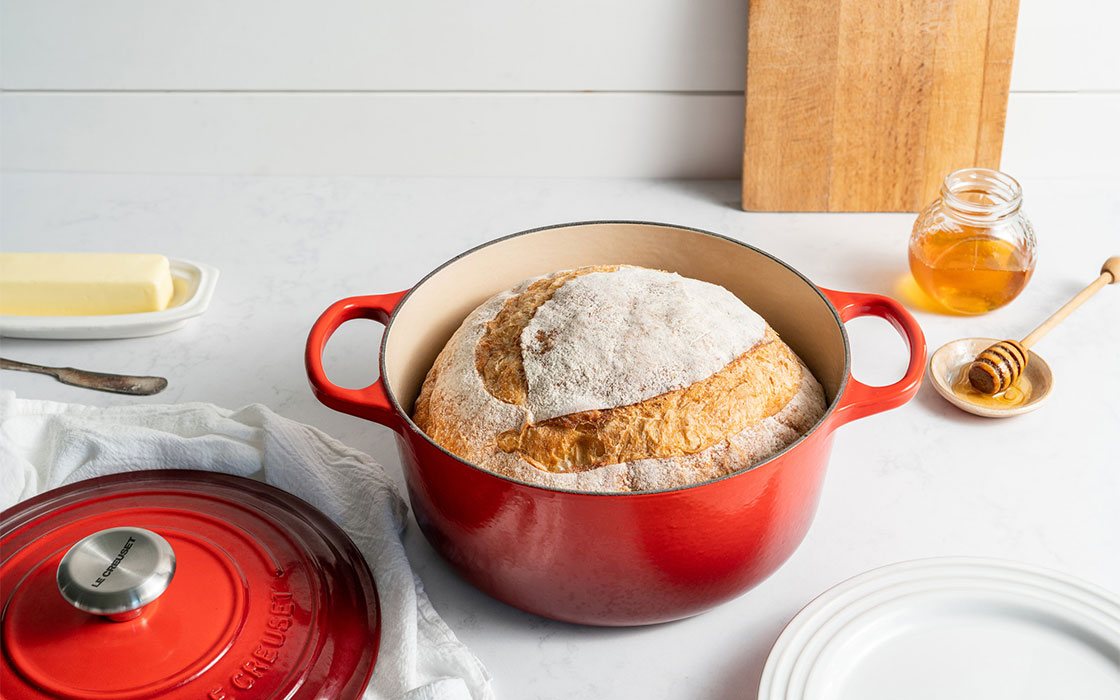
No knead casserole bread has been a popular Le Creuset recipe for years, but especially lately as more of us are baking bread at home. The reason why this technique is so popular is because it is amazingly forgiving, and by far the easiest way to make fresh artisan-quality bread at home.
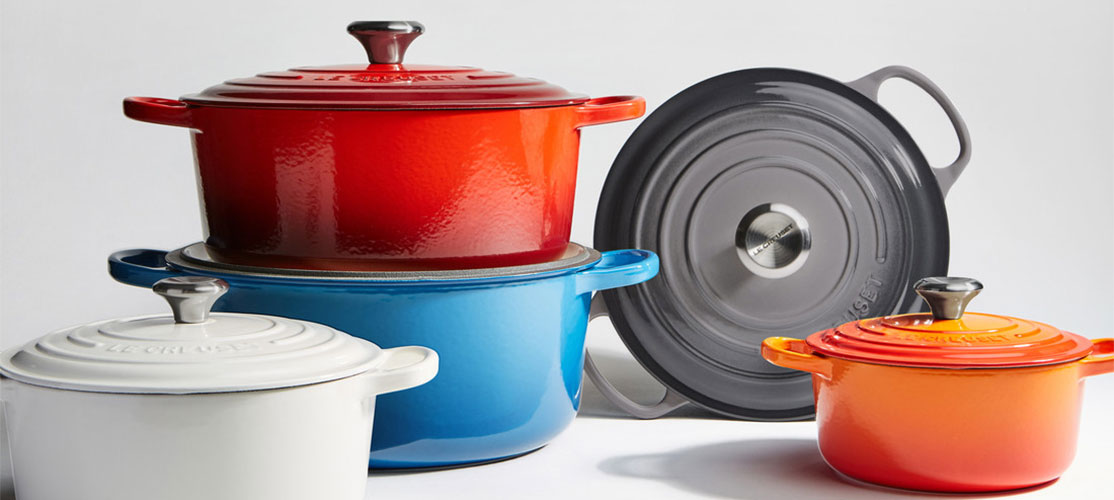
Why Use a Casserole for Baking
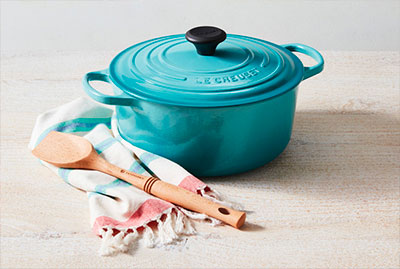
A cast iron casserole creates an ideal environment for bread baking and simulates a steam-injected oven typically used by artisan bakeries. Steam from the wet dough is trapped inside the heavy pot, and helps the dough to rise and form a loaf that has a crispy crust and tender interior crumb. Le Creuset enamelled cast iron is also exceptional at heat distribution and retention to keep the temperature inside the pot more constant than a regular oven, which also helps the baking process.
Most no knead bread recipes call for preheating the casserole while the oven heats up. Not only do we not recommend heating an empty casserole, but it can be challenging to wrangle the wet dough carefully into an extremely hot pot. But we found that preheating is really not necessary to achieve a delicious loaf. The bonus is that you can use the pot itself as a container for the second rise, and it can go directly from the counter to the hot oven when ready to bake.
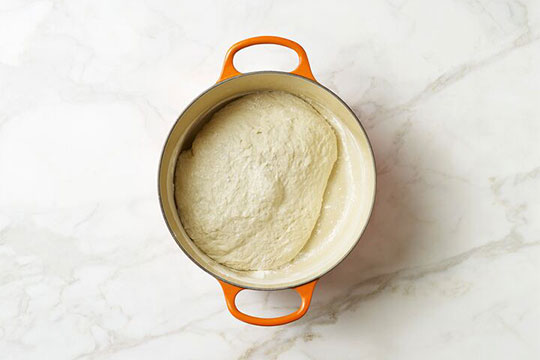
Use your pot lid to cover the bowl while the dough is rising.
Tips from our Kitchen
- You can either use a round or oval Le Creuset casserole. Since the dough is very wet and loose, it will take on the shape and size of the pot as it bakes. So an oval pot will result in more of a traditional oval shaped loaf, while a round pot will produce a round boule shaped loaf.
- Bread flour has a higher gluten content and will result in a dryer dough, but the finished loaf will have more structure and will be chewier. A loaf made with all-purpose flour will be softer with a more tender crumb.
- Because of the long slow fermentation, either instant yeast or active dry yeast will work for a no-knead recipe. If there is a small amount of yeast in the recipe, you really need to let it rise at least 12 hours. If you are short on time, you can increase the amount of yeast so that the dough rises faster.
- The water should be at room temperature. You want the water to be warm enough to get the yeast going, but not hot enough to kill the yeast. A good test is to feel the water with your hand.
- Use your pot lid to cover the bowl while it is rising. It will help to keep a moist and humid environment for the dough.
- The best way to know when a loaf is done is to take its temperature, which should be around 93°C. The loaf should be golden brown all over, and if you tap the bottom it should sound hollow.
- After removing the loaf from the oven, resist the temptation to cut right into it. Allow the loaf to rest and cool on a wire rack for at least 30 minutes. This will finish cooking the interior of the bread and ensure that the texture will not be gummy upon slicing.
- Once you are comfortable with the basic recipe, try mixing up the ingredients or try different types of flour.